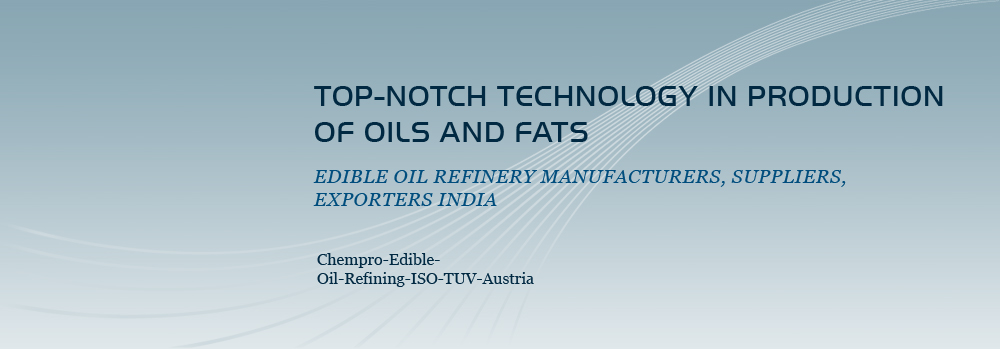
PET Preform Manufacturers
For
Edible Oil
CHEMPRO is starting a new division for PET Preforms especially for Edible Oil. Preforms are manufactured on TOSHIBA Machines specifically made for processing PET material having a longer screw and barrel for better homogenous mixing and lower IV drop.
We being a quality conscious company have raised ours standards to international level. Quality checks are done at regular bases verifying its durability and performance at each level of processing. Preforms manufactured by us are approved by BERICAP India Pvt. Ltd. Read More
Palm Oil Fractionation
Edible OIl ReFinery Exporters , Manufacturers And Suppliers
Chempro Technovation Pvt. Ltd.
CHEMPRO has served the edible oil industry since two decades, starting
off as a small engineering company offering customized solutions for
all aspects of edible oil refining. We through our unique and individualized approach offered cost effective upgrades to help our clients meet quality requirements or market change with
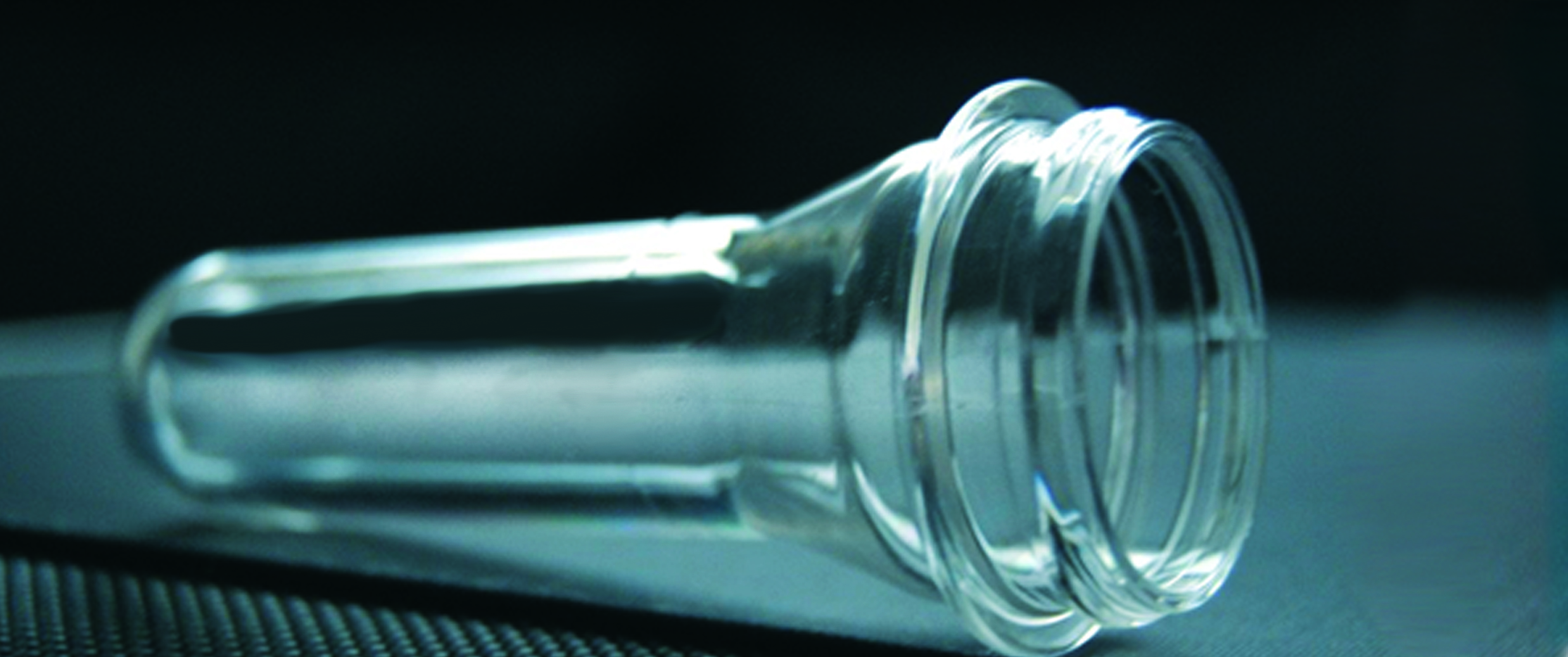
substantial savings in time and money. We have offered plants for refining various vegetable oils like cottonseed, rapeseed(mustard), sunflower, coconut, corn, palm kernel, palm, castor and also recently installed plants for separation of fish oils and also refining of the same. 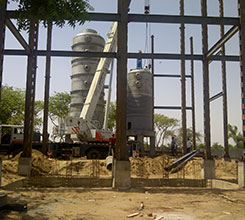

PROCESS DESCRIPTION
EDIBLE OIL REFINING
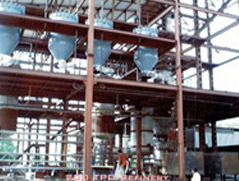
The process of EDIBLE OIL REFINING in general comprises of Degumming, Neutralization, Bleaching and Deodorization and Winterisation. Chemical refining is the traditional method whereby the free fatty acid of the crude oils are neutralized with Caustic Soda. The resultant Sodium Soaps are removed by Batch Settling or by means of Centrifugal Separators. The neutral oils are subsequently bleached and deodorized. This method can be used for reliably refining virtually all crude oils, including oils of low quality, with the exception of Castor Oil.
In all alternative method of edible oil refining of Physical refining, the free fatty acids are removed by distillation in one stage of deodorizing. A fundamental criterion for using this method is that the crude oils should be degummed as effectively as possible, however this is only possible to a limited extent with some crude oil qualities. Other oils for instance cottonseed oil or fish oils, are fundamentally not suitable for Physical Refining.
In all alternative method of edible oil refining of Physical refining, the free fatty acids are removed by distillation in one stage of deodorizing. A fundamental criterion for using this method is that the crude oils should be degummed as effectively as possible, however this is only possible to a limited extent with some crude oil qualities. Other oils for instance cottonseed oil or fish oils, are fundamentally not suitable for Physical Refining.
Bleaching
 For Edible Oil Refining -
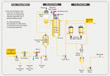
 The unique CHEMPRO SOFT- BLEACH Bleaching system gently removes residual Phosphatides , metals , soaps and oxidation products in addition to colouring matter.
The washed and Neutralized oil is preheated and fed to the Bleacher through the Cascade Vacuum Dryer. Bleaching earth and activated carbon is added to the oil through the dosing unit which is controlled by a programmable controller. The Bleacher Proprietary designed with internal partitions and set of high efficiency turbine agitators to avoid short cycling and provide necessary retention time before filtration. The conjunction of vacuum dryer with a bleacher is what is unique about SOFT BLEACH where by oil going to the bleacher is thoroughly dried and deaerated in the cascade vacuum dryer and also the fugitive particles from the bleacher sucked under vacuum are scrubbed by the down coming oil.
The bleached oil from the Pressure Leaf Filters transferred to the bleached oil tank for intermediate storage. For Edible Oil Refining CHEMPRO has a unique advantage of deep knowledge of the sorption processes and understanding of surface phenomenon of various grades of Fullers Earths derived from attapulgite, sulfuric and hydrochloric Activated Earths derived from montmorillonite, Steam Activated Carbons and Chemically Activated Carbons. This makes them understand the bleaching process not superficially for removal of colour but also as a tool to remove undesirable toxic residues like pesticides, heavy metal, mineral oil traces.
Degumming & Neutralization
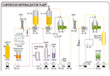 The Edible Oil Refining process depending on types of Phosphatides either water degumming, Acid Degumming, or Superdegumming is carried out so as to yield Phosphorous contents of less than 10ppm.
In Neutralization the predegummed oils or oils with very low phosphatide contents are saponified with Caustic Soda and the Sodium Soap is separated. The oil is initially heated to the optimum process temperature. In order to condition the non-hydratable phosphatides, a small quantity of concentrated phosphoric acid is added and intensively mixed with oil.
Following a brief reaction time, diluted caustic soda is added in order to neutralize the free fatty acid and the phosphoric acid. After mixing with the oil, the mixture is either conveyed directly to the first separator or it passes through a further reaction tank. The latter is recommended only for oils with a relatively high phosphatide content in the neutral oil is still too high for the subsequent process stages, and it must therefore be reduced further by one or two washings. For this purpose hot water is added to the oil, intensively mixed and the soapy wash water is removed in a further separator.
In general one wash stage is adequate. A second washing is only necessary if very low residual soap contents are required. Recently to reduce the water consumption in Edible Oil refineries we have pioneered the use of Silica Adsorbents for removal of residual soaps after neutralization. Upto 1000 ppm soaps are removed by sequential addition of silica adsorbent under presence of moisture at 65 C. The dosage of the silica adsorbents may vary from 0.1 to 0.2%.The silica adsorbents further also pick up polar impurities in oil and also gums to give a better edible oil in subsequent processes.